Tyr
Flame-Breaker
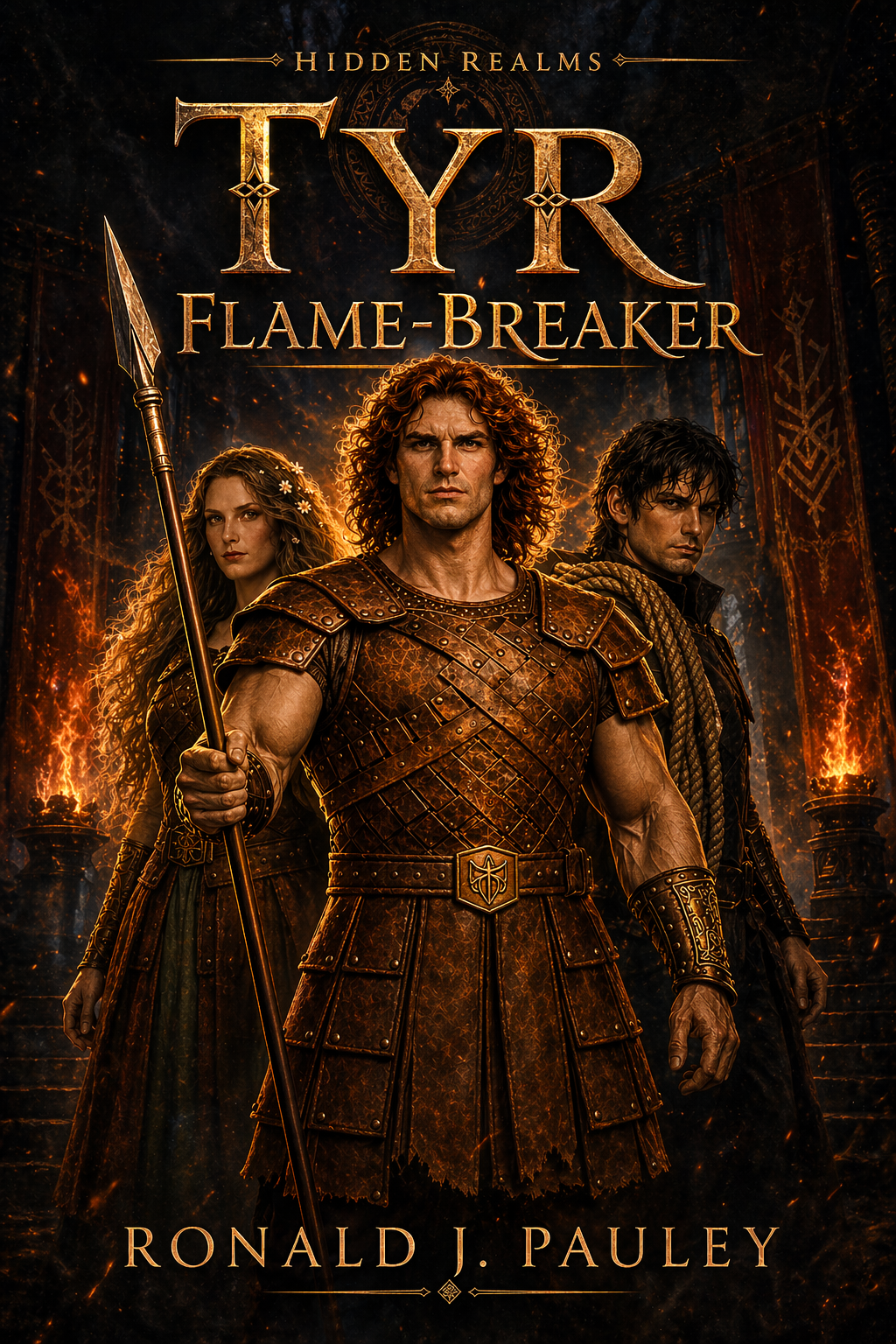
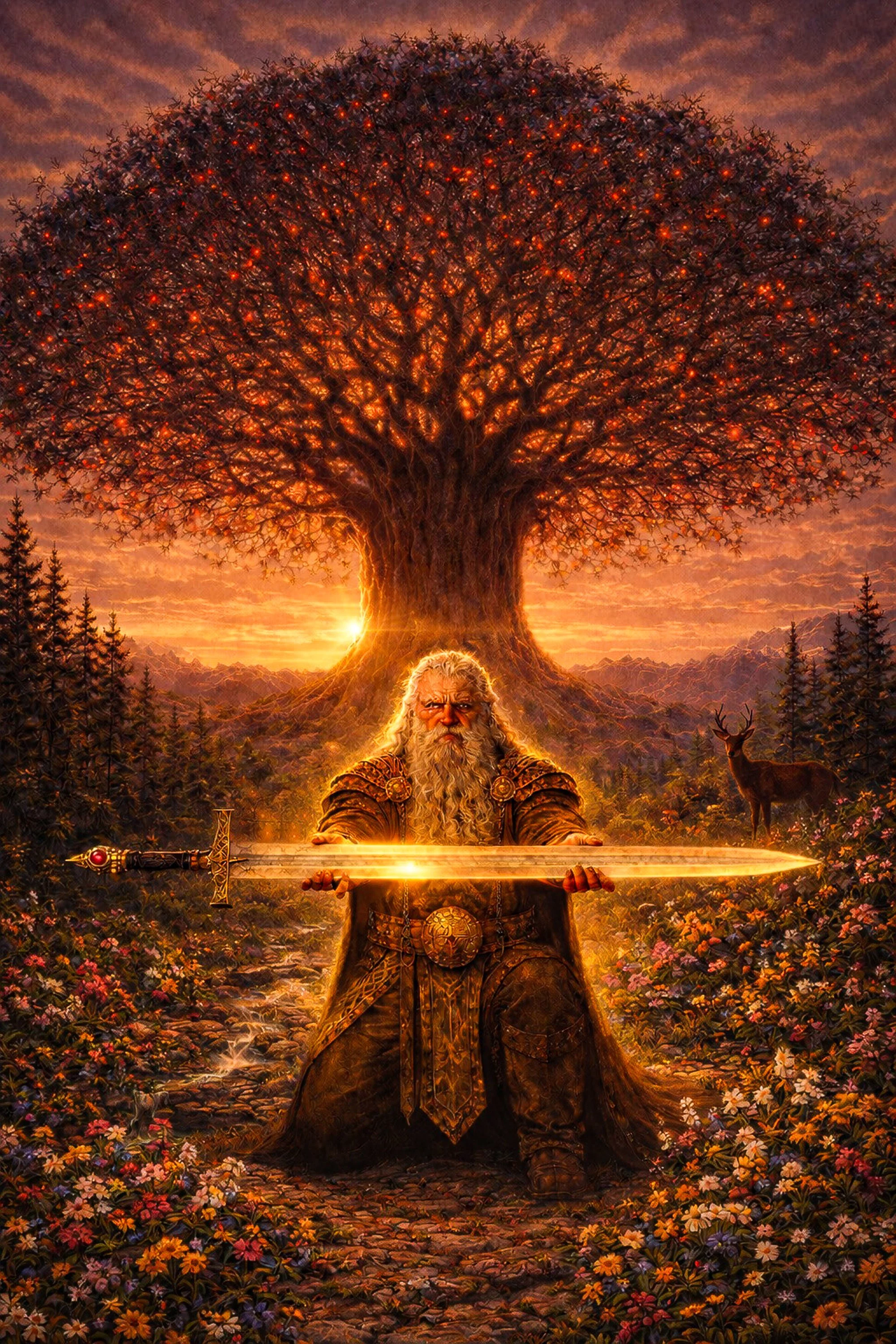
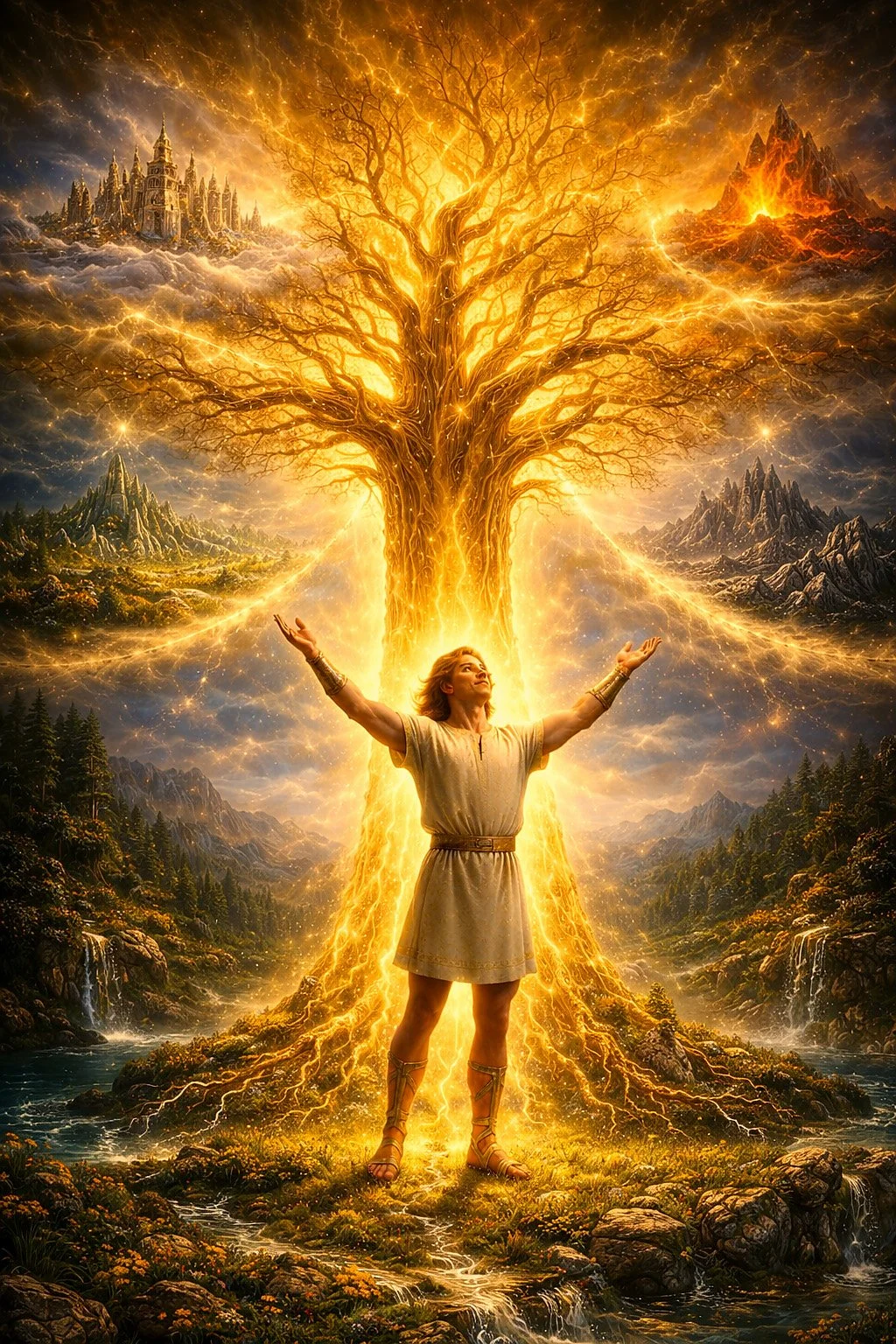
A mythic saga inspired by Norse mythology
and told in the spirit of the ancient Eddas
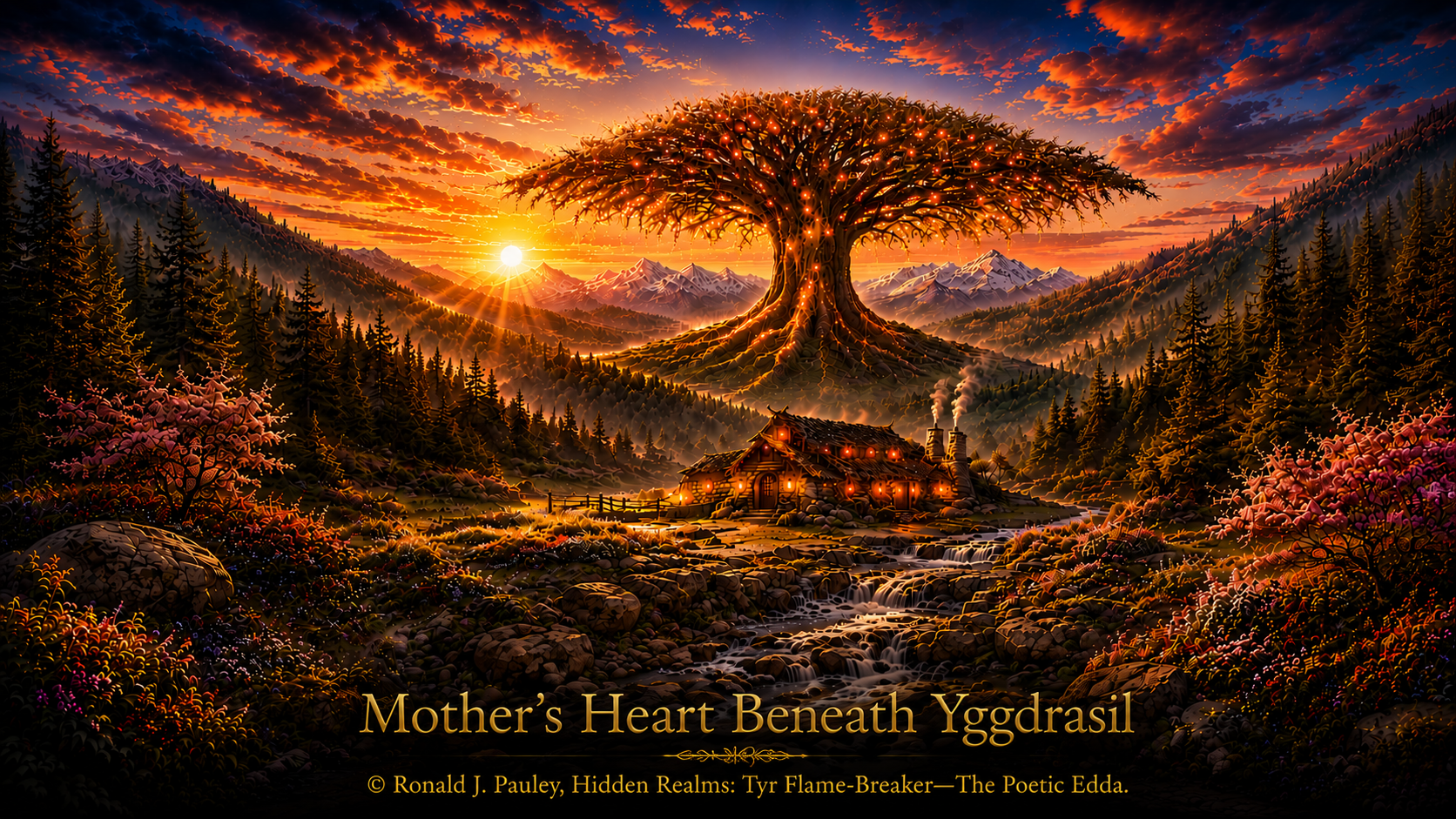
Before Asgard rose and before Odin claimed a throne, the Hidden Realms existed beyond time.
Here dwelled gods, giants, and forgotten peoples whose stories shaped creation itself.
— The Books —
The Tyr Flame-Breaker Collection
—The Past—
Every story has a beginning.
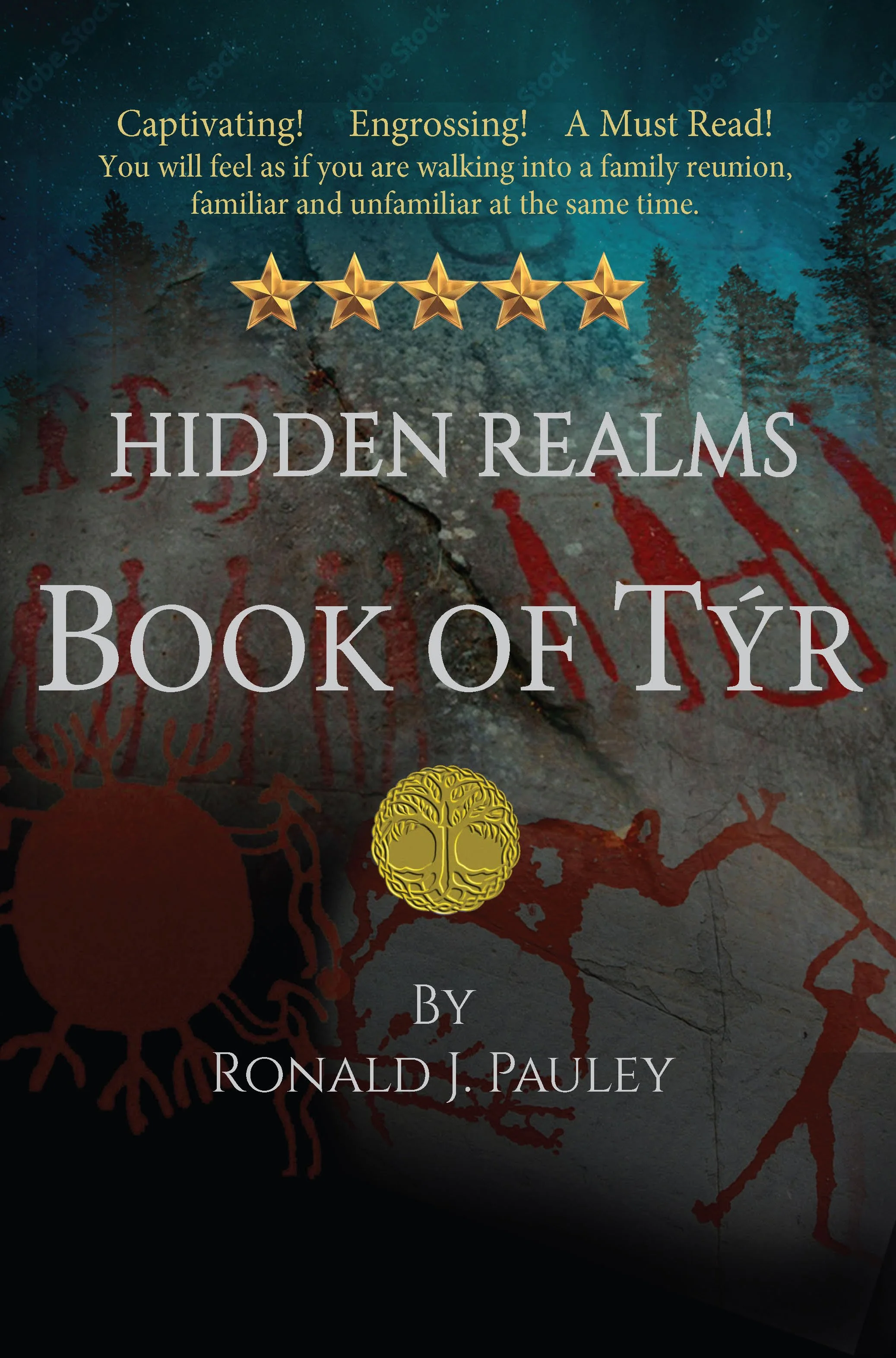
The journey of Hidden Realms began with The Book of Tyr, the first telling of a story that had lived in my imagination for many years. As my understanding of storytelling evolved, I came to realize that the tale deserved a richer, deeper, and more mythic expression.
That realization also led to an important clarification for readers: this is a fantasy novel inspired by Norse mythology, not a retelling of the Eddas. To better reflect that distinction, I chose a more cinematic title—Tyr Flame-Breaker.
The revised saga embraces a stronger Norse voice, weaving Eddaic tone, chapter poems, songs, and mythic storytelling traditions into a broader vision. What began as a single novel has grown into an expanding world that now includes companion volumes, original artwork, and future adaptations, all dedicated to bringing the Hidden Realms to life.
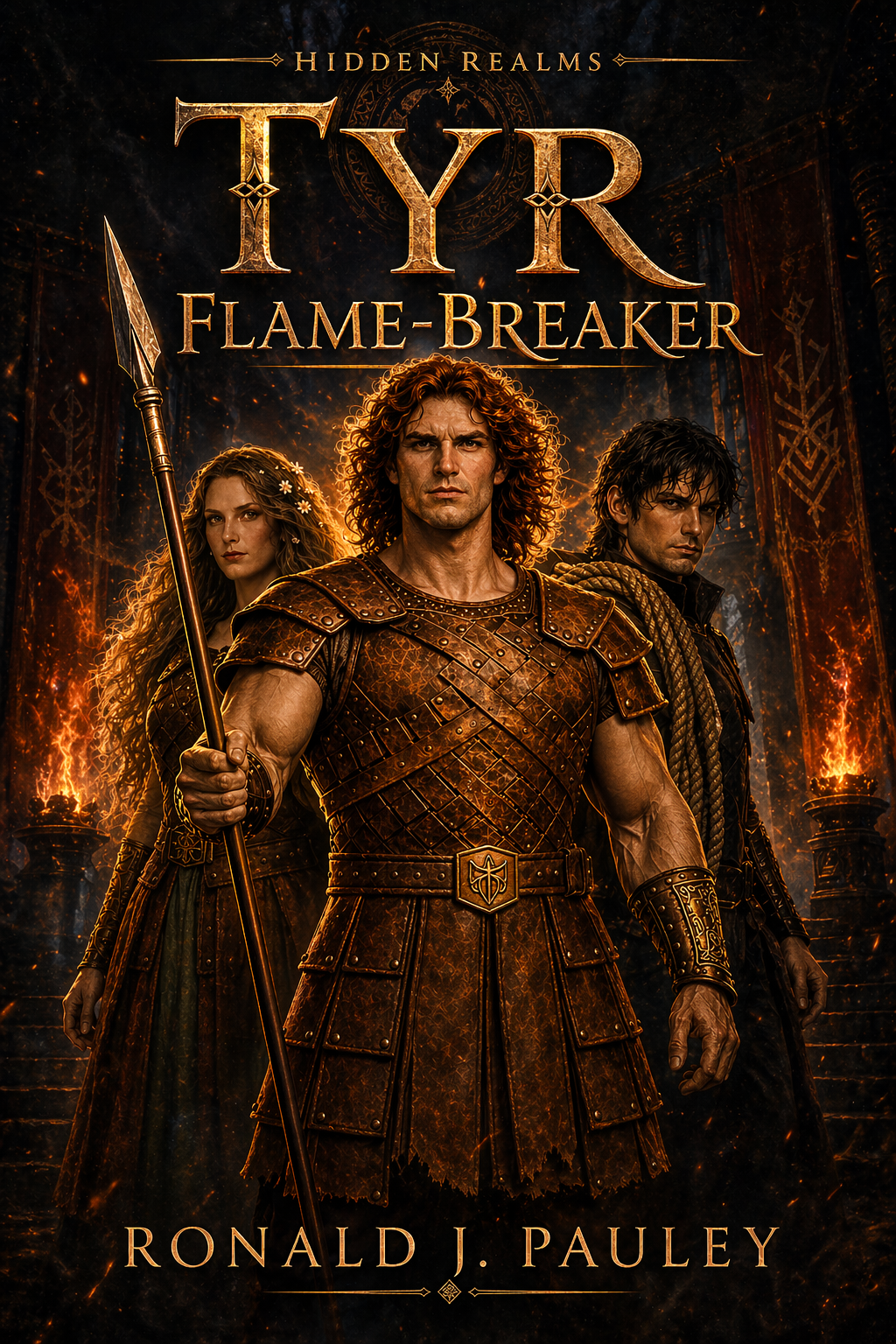
375 Pages • 7×10” Hardcover • Epic Mythic Fantasy
—The Present—
Tyr Flame-Breaker is a mythic fantasy that follows the life of Tyr from the age before Odin's rise to the shadow of Ragnarok and beyond. Inspired by Norse mythology yet forging its own path, the saga explores divine law, sacrifice, fate, and the eternal struggle between order and chaos across the Hidden Realms. Written with an Eddaic tone and mythic cadence inspired by ancient oral traditions, the narrative recaptures the wonder, tragedy, and grandeur of a forgotten age.
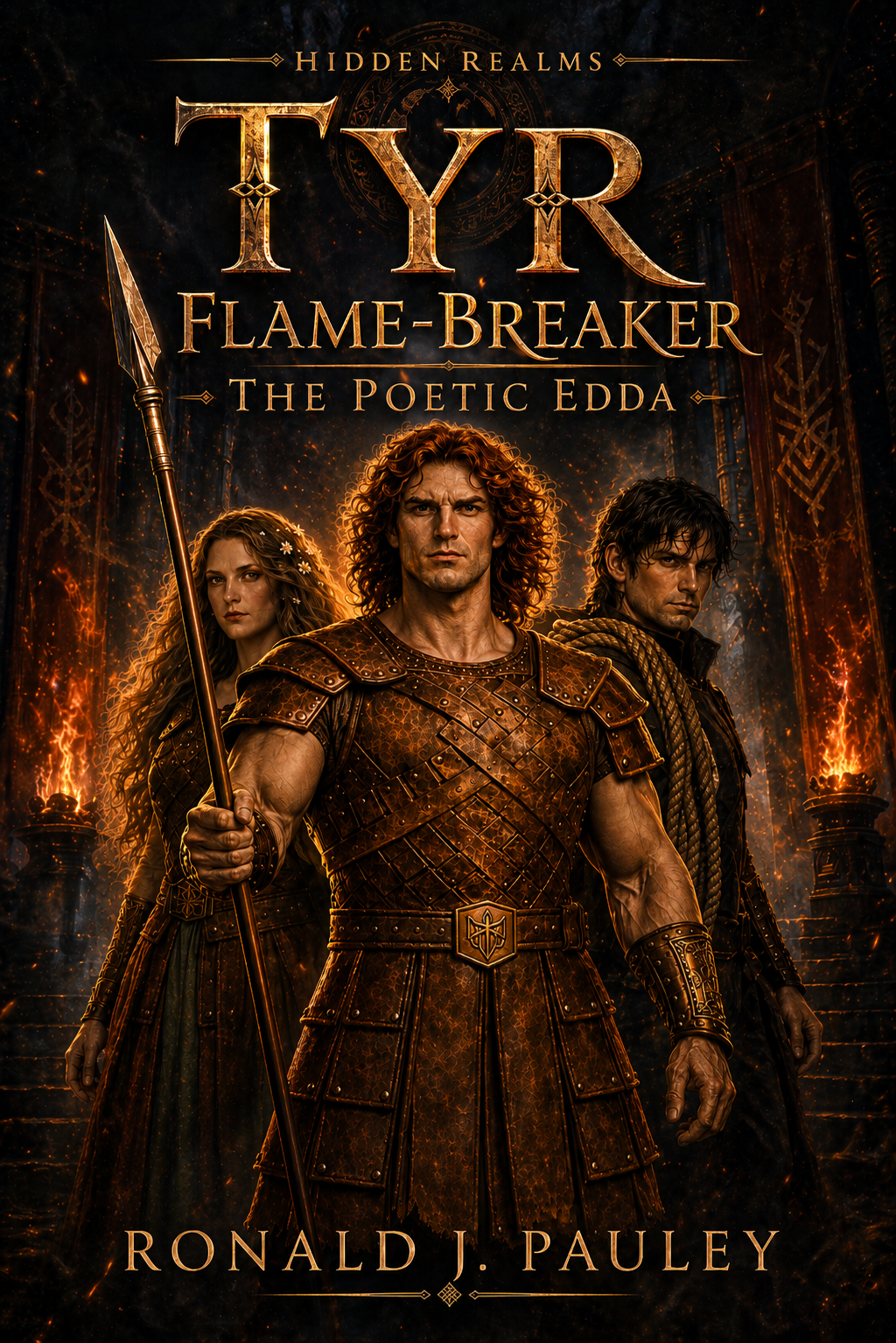
344 Pages • 7×10” Hardcover • 150+ Illustrations • Epic Mythic Verse
—The Companion Volume—
Accompanying the novel is Tyr Flame-Breaker—The Poetic Edda, Illustrated, a companion volume that reimagines the saga as epic poetry, song, and more than 150 illustrations. Written in an Eddaic voice and richly illustrated throughout, it evokes the feeling of a lost mythology rediscovered—a legendary age preserved through verse, memory, and art.
—The Future —
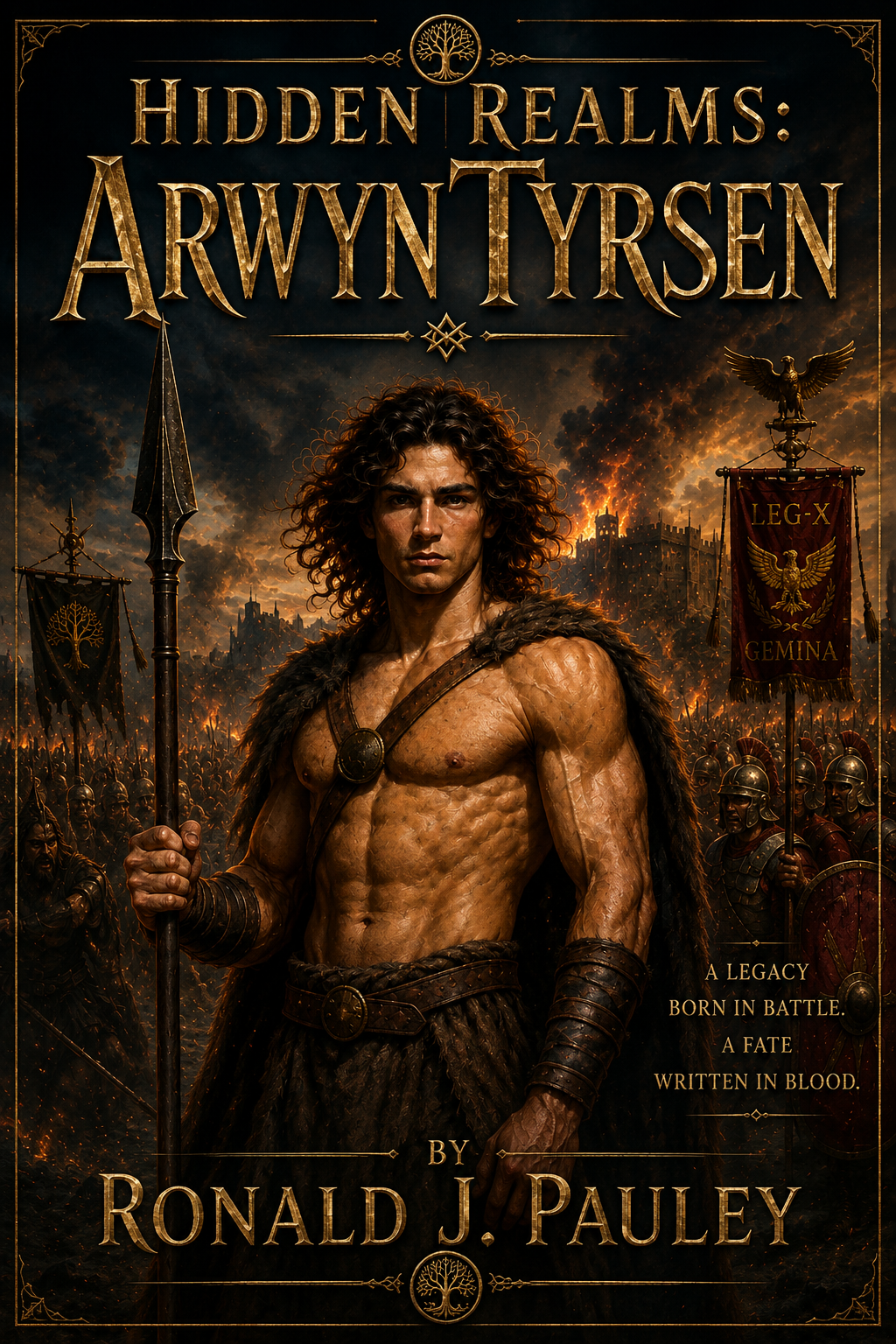
— Coming 2027 —
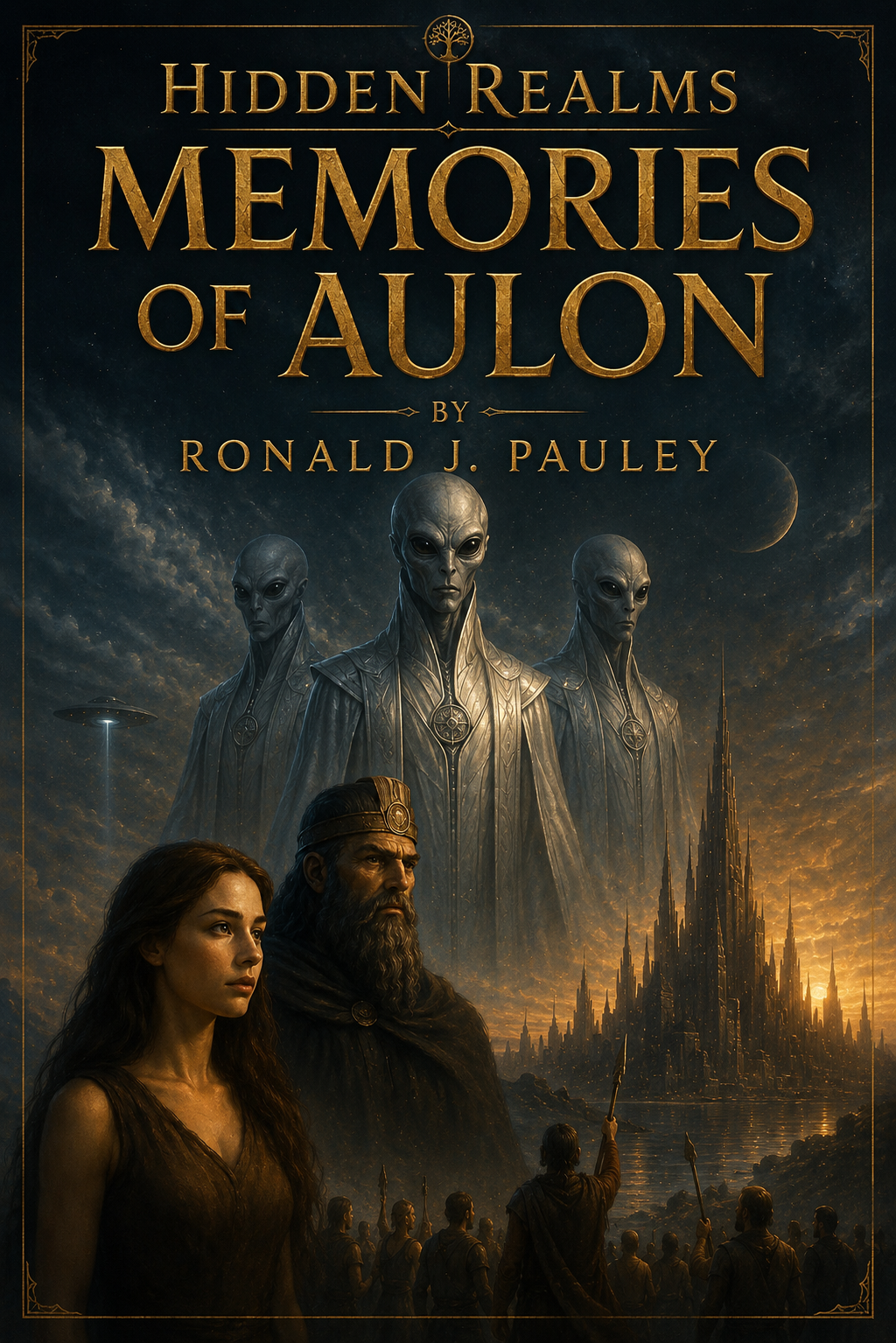
— Coming 2028 —
— Beyond the Books —
The Movie
The world of Hidden Realms continues to expand beyond the printed page. A young adult adaptation of Tyr Flame-Breaker is currently in development with Dream Ranch Productions. As the project moves toward its upcoming crowdfunding campaign, readers can follow its progress and learn more about the studio behind the adaptation.
— Explore —
Tyr Flame-Breaker
A collection of prose, artwork, and poetry
from the Hidden Realms:
Tyr – Flame-Breaker & The Poetic Edda.
Experience the world of the Hidden Realms
through story, verse, and art.
Chapter 1
❖ ᛏ ❖ ᛏ ❖ ᛏ ❖
Beneath the roots and branches vast
where first songs burned, and ages passed,
The Legion raised the lore of might,
naming fate through forging light.
From mother’s blood, from ancient line,
rose child marked by will divine.
Not gods alone nor Giants’ wake,
but oath-bound bridge ‘tween loss and fate.
For Tyr was named before all breath,
yet walked the worlds through birth… and death.
Thus, runes remember, thus sagas start,
The Pride Once Held in Mother’s Heart
❖ ᛏ ❖ ᛏ ❖ ᛏ ❖
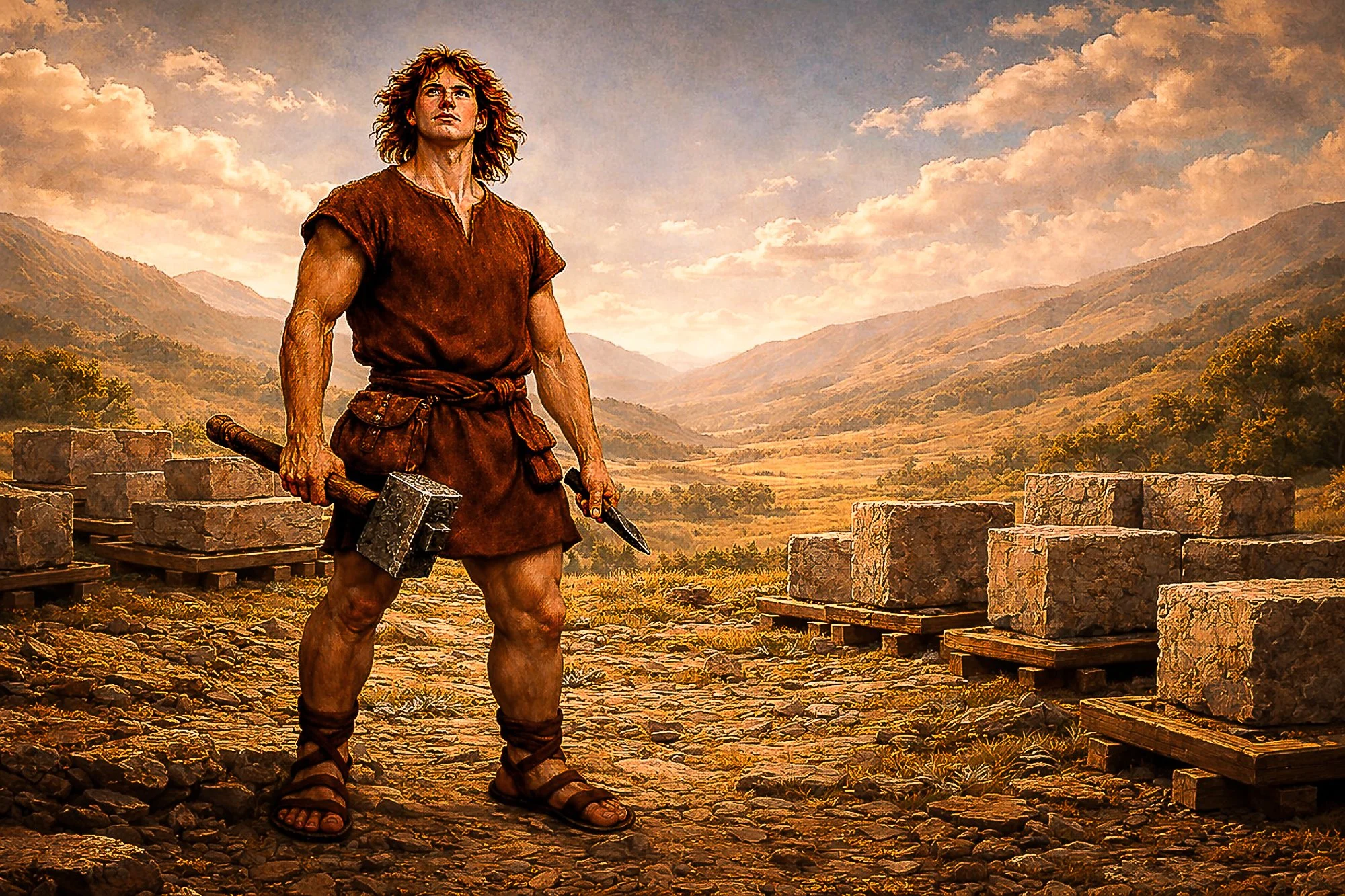
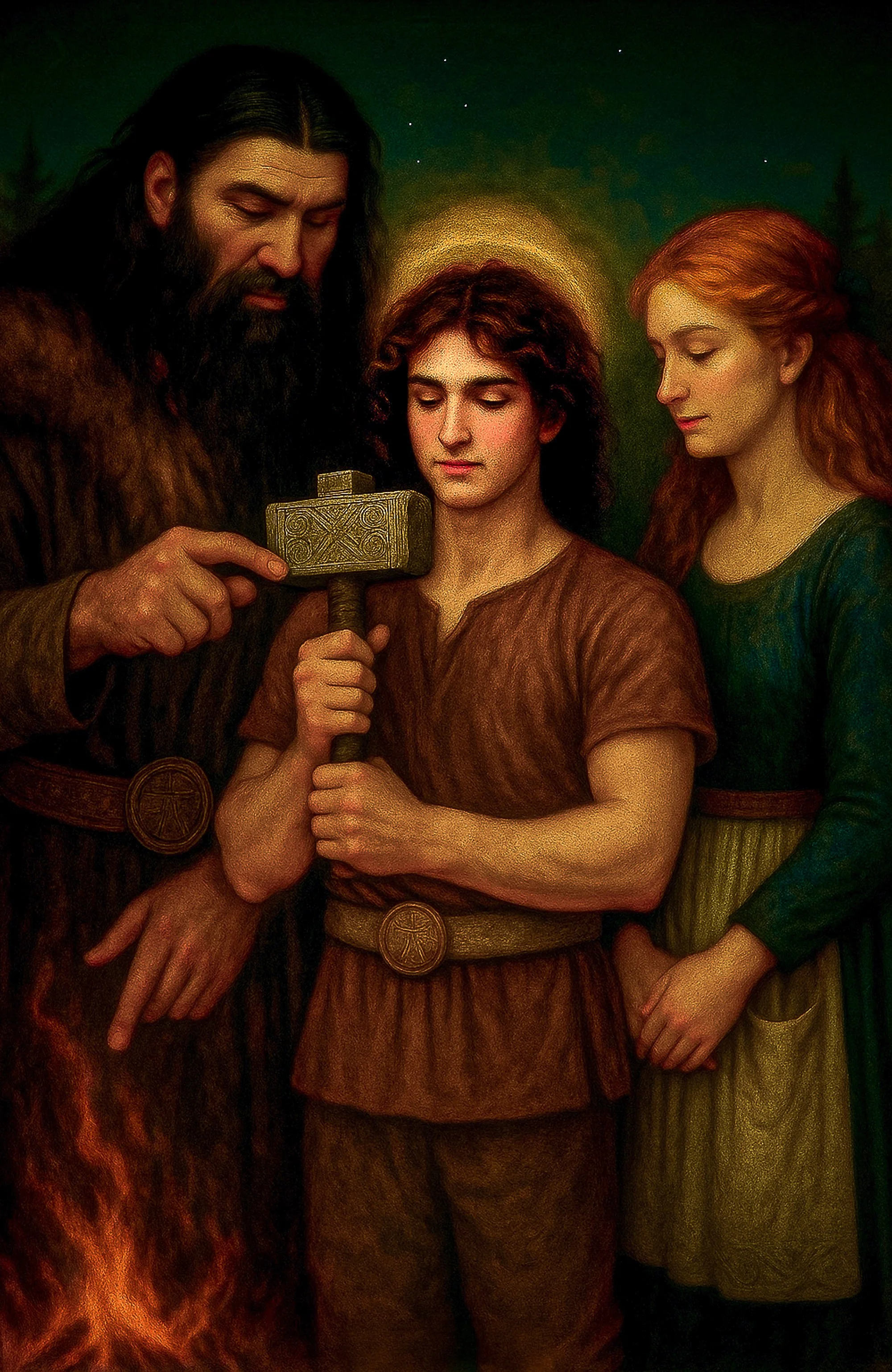
In the hills overlooking a vast, lush valley to the east and the restless sea to the west, Hymir the Great shattered mountains with his hammer, Mjolnir. Blow after blow rang across the highlands like thunder, the earth groaning beneath each strike. Even for Giants, the labor was relentless.
He searched tirelessly for the divine remnants—the sacred dust and fragments that had once filled his beloved valley… Mother’s Heart.
Nearby, Tyr, the youngest of Hymir’s sons, worked beside his older brothers. Together they gathered the displaced boulders and shaped them into building blocks for what was to come. Each labored in grim silence, quietly longing for the day’s end.
Tyr heaved another massive slab into place, steadying it. Then his hammer and chisel rang against the rock. Fragments chipped away beneath each precise strike until the stone took its proper form. At last, he rolled the finished block onto a heavy wooden sled beside the others.
Suddenly—
❖ ᛏ ❖ ᛏ ❖ ᛏ ❖
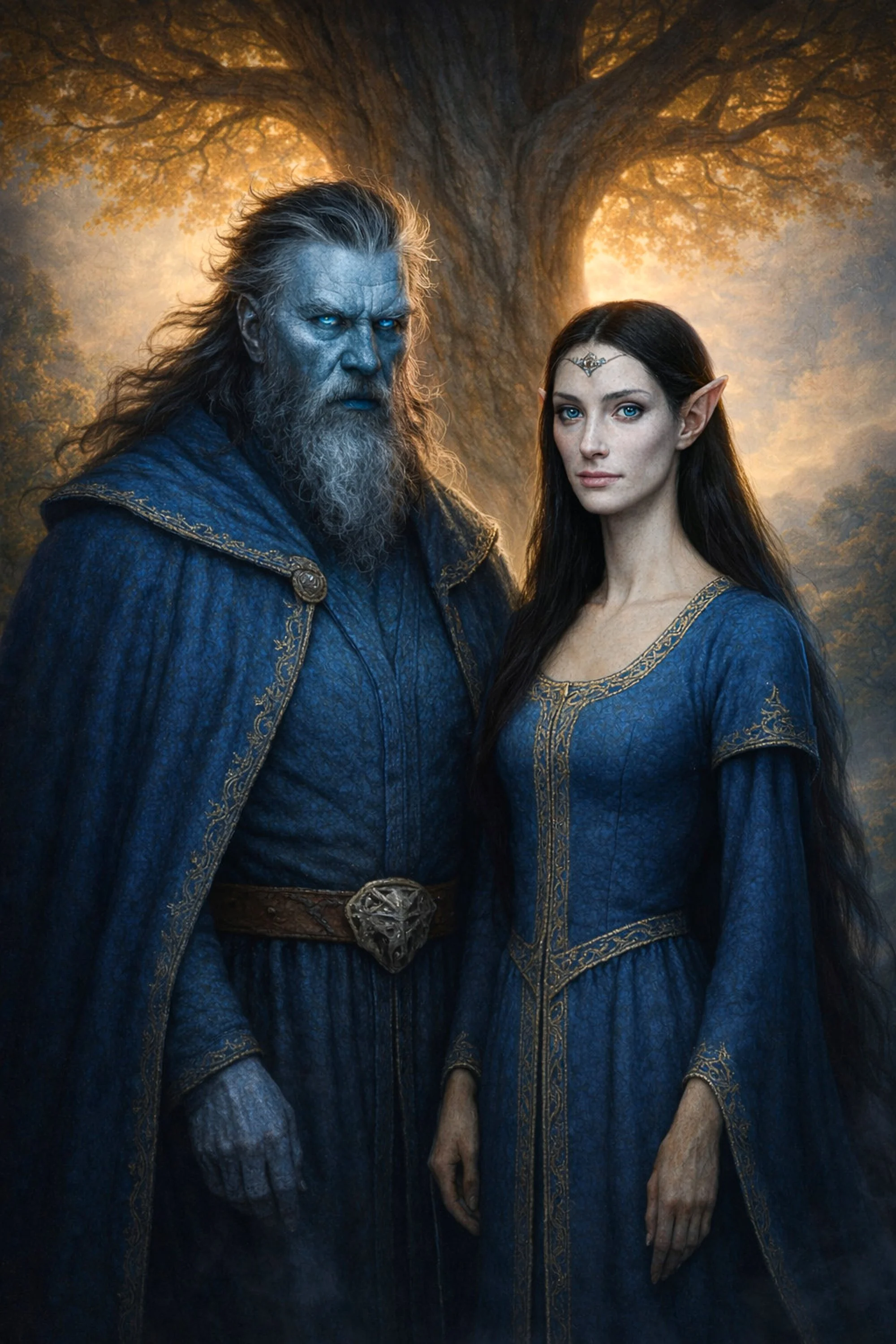
—Where Ice and Crystal Stand As One—
Beyond the gathered feast and fire
Tyr’s wandering gaze was drawn,
Where Farbauti and Laufey stood
Like winter crowned by dawn.
Laufey moved with radiant grace
Refined as falling snow,
While vast beside her Farbauti stood
Llike mountain carved from cold.
Together strength and elegance
Were bound as living throne,
And quiet power lingered there
No boast had ever known.
Beside young Tyr, sly Loki’s mirth
For but a moment waned,
As near his parents’ watchful gaze
Old burdens stirred again.
Yet Tyr perceived the weight unspoken
Beneath his cousin’s grin,
And smiling stepped a little back
To draw forth laughter’s wind.
Bright laughter answered once again,
Though hidden still there shone
The fleeting pride and burden borne
By House of Farbauti alone.
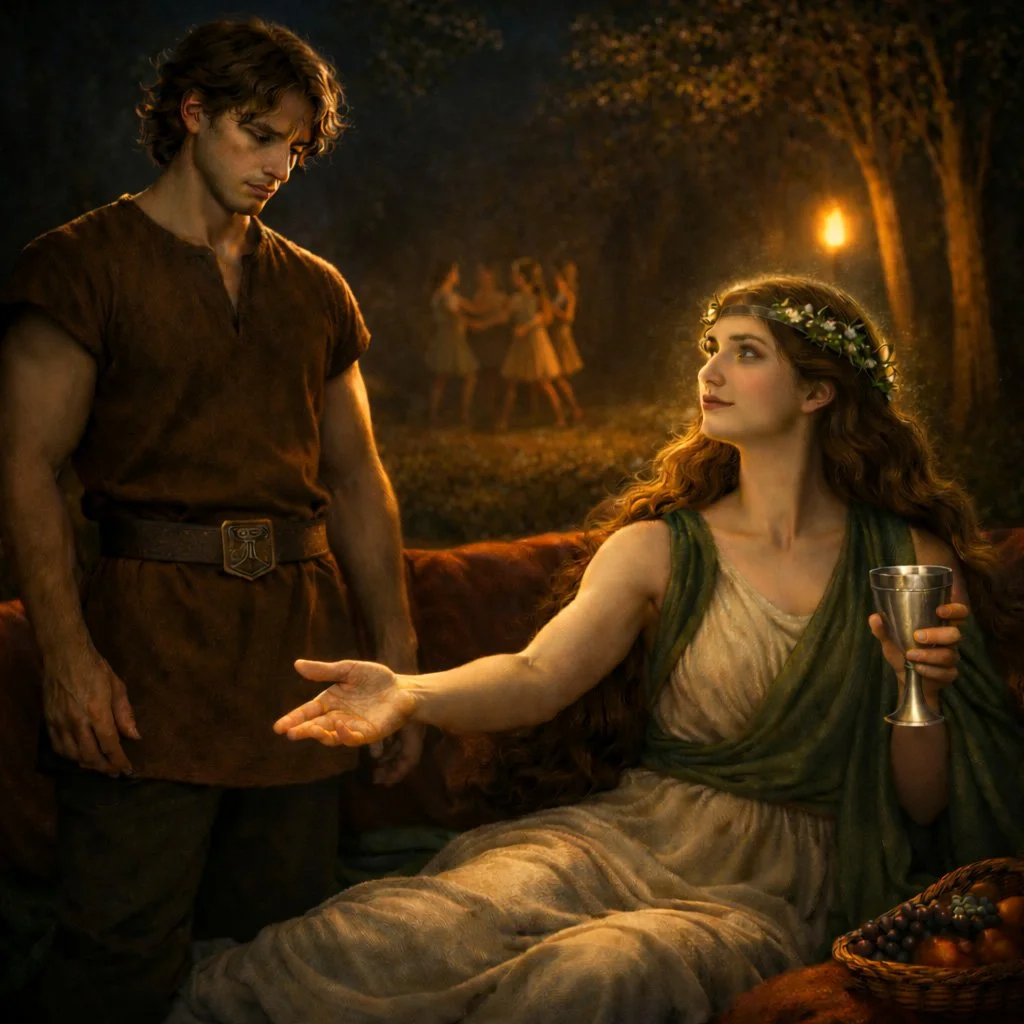
—Beneath the Lantern Boughs—
There waited fair Lady Njorun
within warm lantern gleam,
whose presence stilled the restless mind
that wandered wake and dream.
She smiled with knowing warmth and spoke:
“Nerthus shall I be.
No formality shall stand between your heart and me.”
And softly as she took his hand, the burdens of the day
seemed carried off like drifting mist
before dawn’s rising ray.
Warm color touched young Tyr’s calm face
beneath her steady gaze,
For living beauty shone in her beyond all glamour’s haze.
As hours deepened into hush
beneath the whispering leaves,
Their hearts and spirits wandered close like roots through hidden streams.
Then resting in great Nature’s lap,
young Tyr surrendered sleep,
Cradled by the breath of Mother’s Heart
and pulse of earth beneath.
❖ ᛏ ❖ ᛏ ❖ ᛏ ❖
Chapter 2
❖ ᛏ ❖ ᛏ ❖ ᛏ ❖
From feast-fire’s roar she led him away,
To root-deep woods where night holds sway.
There, Earth’s breath stilled his restless mind,
And love grew quiet, slow, and kind.
He laid his brow where green things keep,
And in her lap did the young lord sleep.
Bright torch-fire flame and fleeting delight
Faded like frost before earth’s true might.
He dreamed of halls and vows unmade,
And love that walked where fate was laid.
He woke unknowing the road he would take,
Yet walked it boldly—
By Root And By Fate
❖ ᛏ ❖ ᛏ ❖ ᛏ ❖
Rising from slumber, Tyr found himself lying in soft grass and jasmine, a crown of woven flowers resting upon his head. He sat up and drew the blossoms free, searching the glade for Nerthus. She and her children were gone—returned to Vanaheim, or already abroad in the valley with their tireless grace. Their fragrance lingered in the morning air like a farewell. For a fleeting moment, he wished she had remained to greet the dawn beside him.
He stretched and found his clothes folded neatly upon a low branch. Dressing, he paused to take in Mother’s Heart. The Vanir and the valley’s quiet magic had already mended the scars left by the Feast; trampled grass stood upright once more, and broken earth bore no scar. A light breeze stirred the meadow, and dew shimmered across the grass like fallen stars. The land lay in stillness—almost sacred.
❖ ᛏ ❖ ᛏ ❖ ᛏ ❖
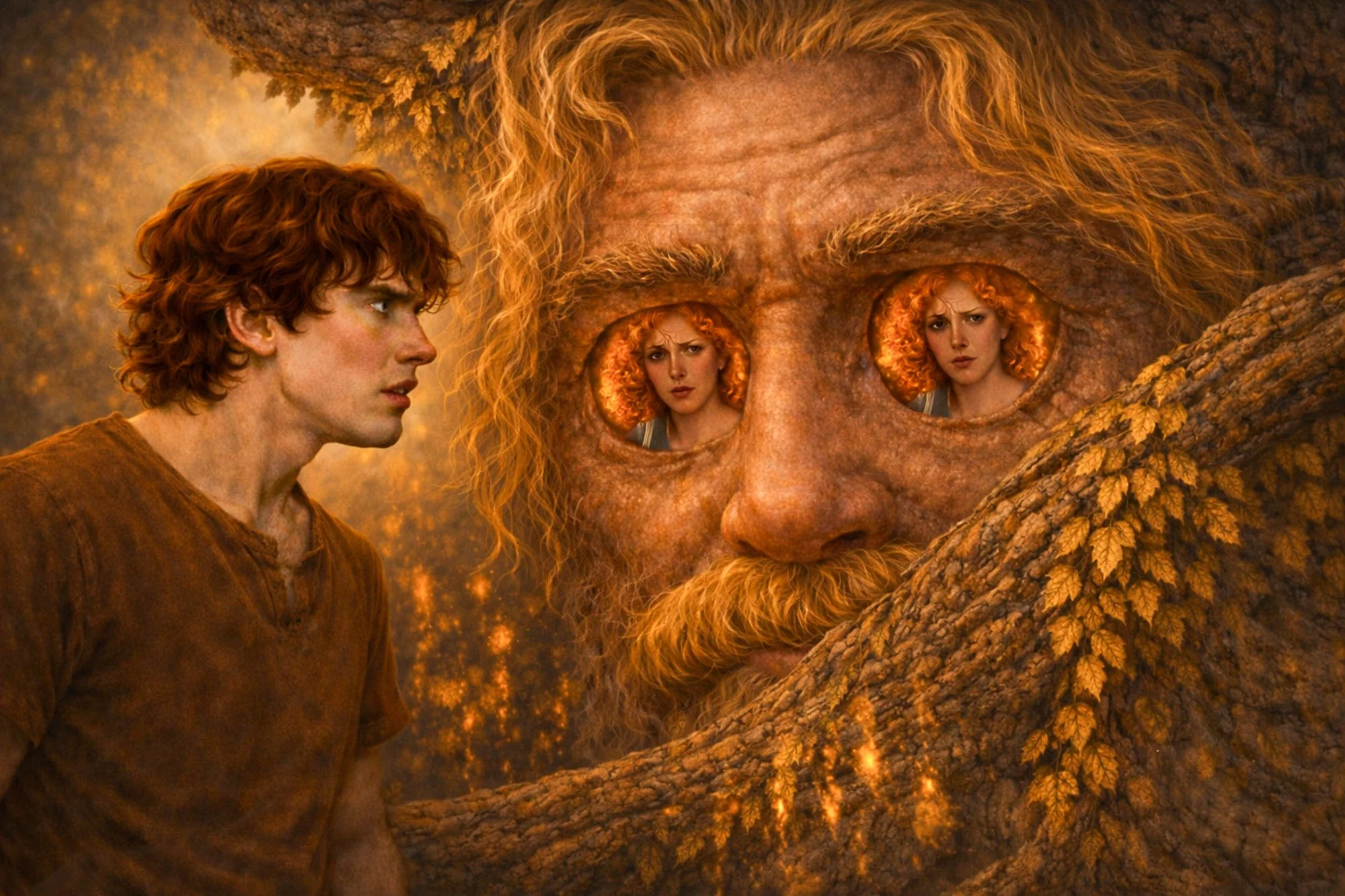
Scene 2.4 - Where Hrod Had Gone
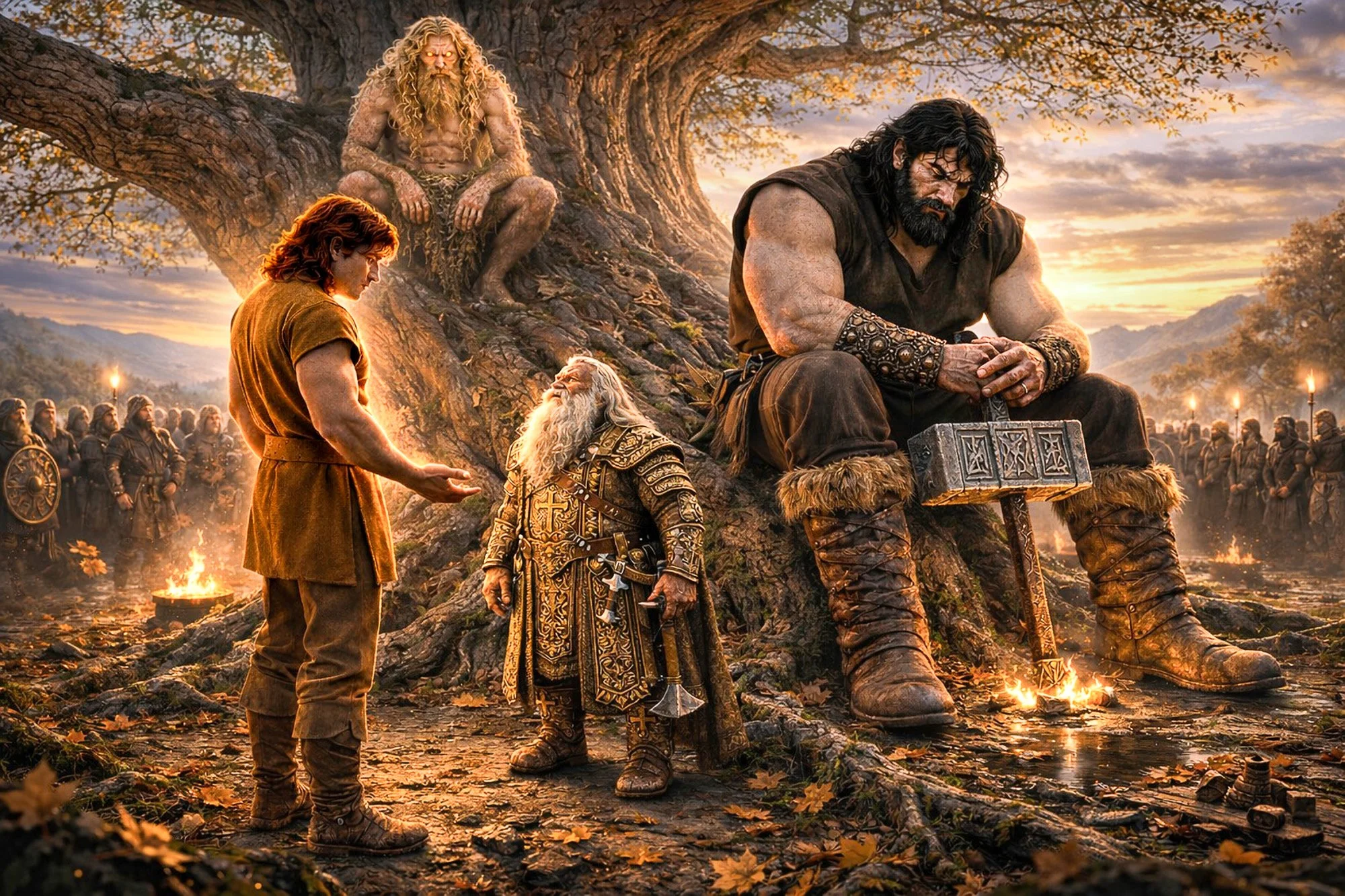
Deep within great Yggdrasil
Great Heimdall silent stirred,
And listened through the trembling roots
Before he spoke a word.
Heavy sorrow filled his voice
Like winter before rain:
“For Hrod has passed beyond the Tree
Through paths unknown and strange.”
“Seven Realms the Tree yet binds,
Yet farther lies her flight.”
Then terror seized young Tyr’s heart
Beyond all realm and light.
Scene 2.11 - The Realm Beyond Yggdrasil
Then Sindri of Svartalfheim spoke low
Beside the Hall that day,
“Lord Tyr… thy mother may be lost
Beyond the Seven’s way.”
Grave Heimdall answered from the boughs,
“No path through root or realm
Leads onward to the Hidden Shore
Beyond the Tree’s great helm.”
“What realm is this?” young Tyr demanded.
Then Hymir answered low,
“I have glimpsed that distant place—
Yet little do I know.”
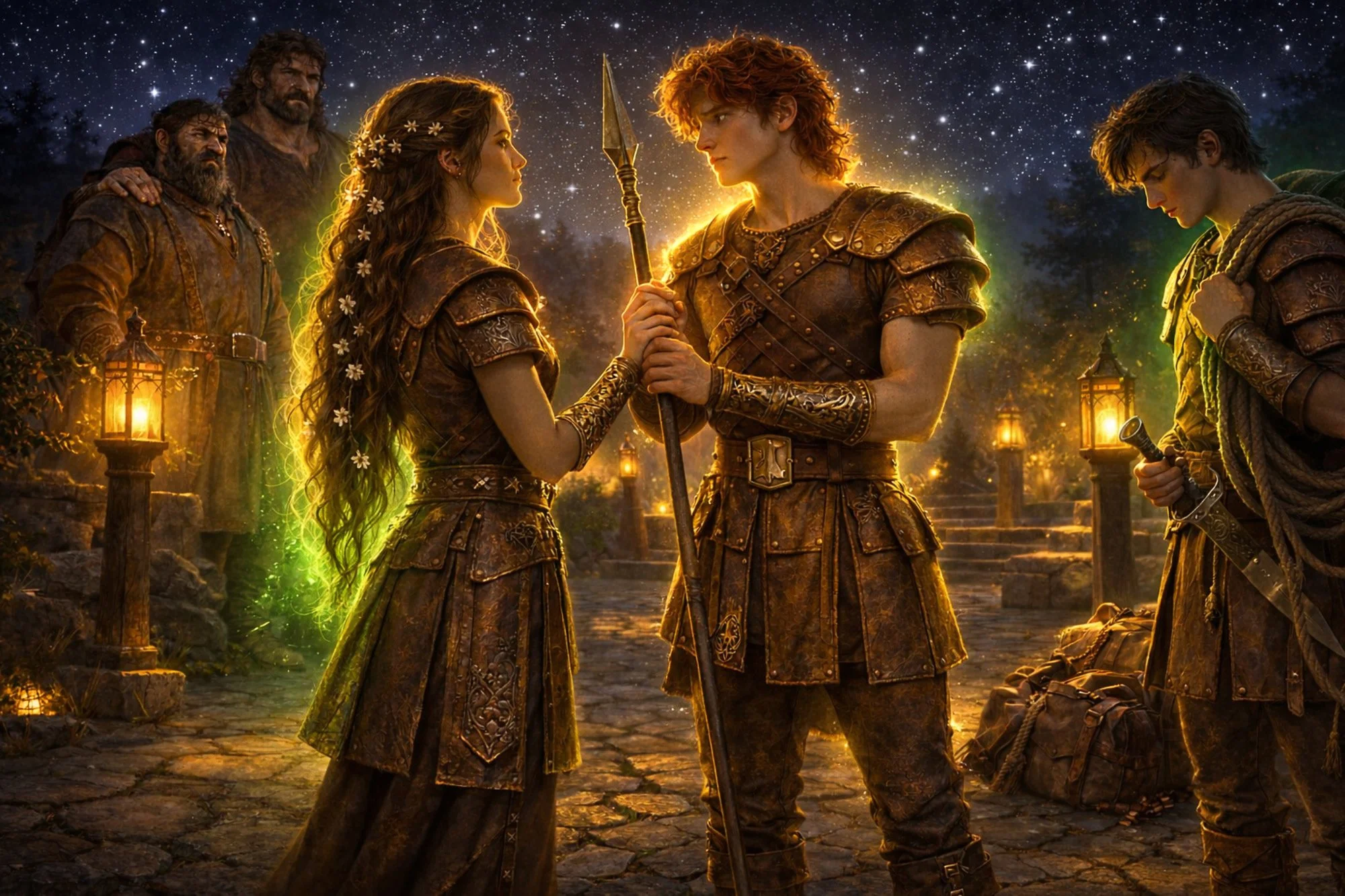
Scene 2.21 - The Night Their Destinies Began
— Song of Tyr Flame-Breaker —
Oh, sing of the storm that walked the flame,
From hidden halls his law-fire came.
Through ash and blaze his road was laid,
Where all would burn, his course was made.
The Lord of Fire from shadow rose,
With crown of ash and breath that glowed.
No hand could hold, no chain could bind—
He sought to scour all humankind.
Then one stood fast where all had fled,
And faced the flame all realms had dread.
He raised his sword—no plea, no cry—
And made the tempest bow his head.
Cry loud! Cry far! And light the pyre!
Flame-Breaker tamed the Lord of Fire!
So raise the horn and beat the drum!
Let every hall with thunder come!
❖ ᛏ ❖ ᛏ ❖ ᛏ ❖
Why Tyr
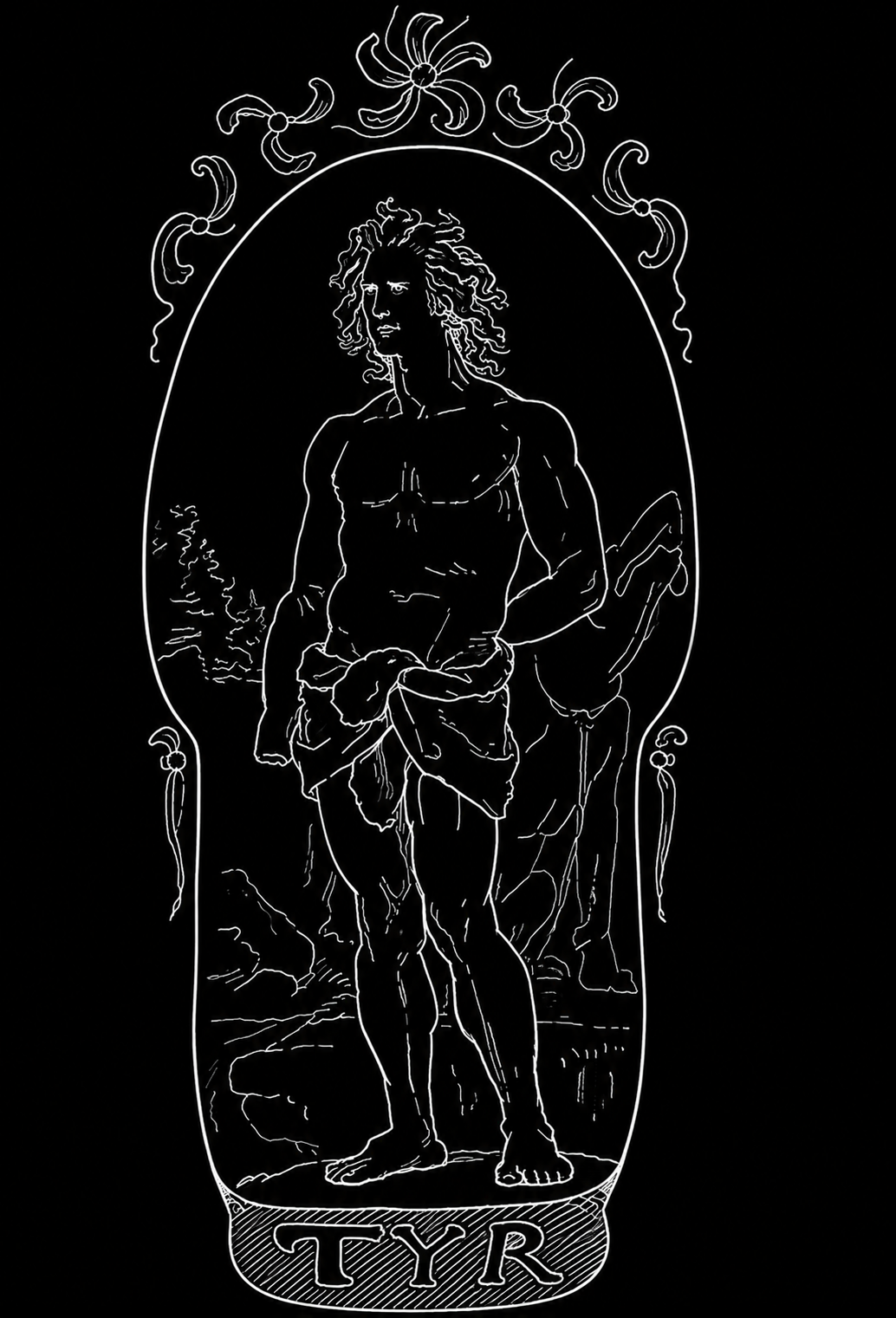
Tyr, illustrated by Lorenz Frølich (1895)
Of all the figures in Norse mythology, Tyr intrigued me because his story felt unfinished.
Long before Odin became the dominant figure of the surviving myths, Tyr was among the oldest and most revered gods of the Germanic peoples. Yet much of his story has been lost to time. The surviving texts tell us that he sacrifices his hand to bind Fenrir and that, at Ragnarok, he slays Garm, the guardian of Helheim, before falling himself. What they do not explain is why.
That unanswered question stayed with me. Why would Tyr's final battle be against Garm? Why is that conflict important? And why does it occur just before the world is renewed and Balder returns to guide mankind into a new age?
The more I studied the old myths, the more I felt there was a larger story hidden between the surviving lines.
There was also a more personal reason. As I was researching, I came across an 1895 illustration of Tyr by Danish artist Lorenz Frølich. The resemblance was striking enough that friends and family noticed it immediately. At nearly the same time, a psychic unexpectedly told me I was associated with a god of war. I laughed and dismissed the remark, but years later I found myself returning again and again to the image of Tyr and the mysteries surrounding him.
Whether by coincidence, inspiration, or something stranger, Tyr became the foundation of the Hidden Realms saga.
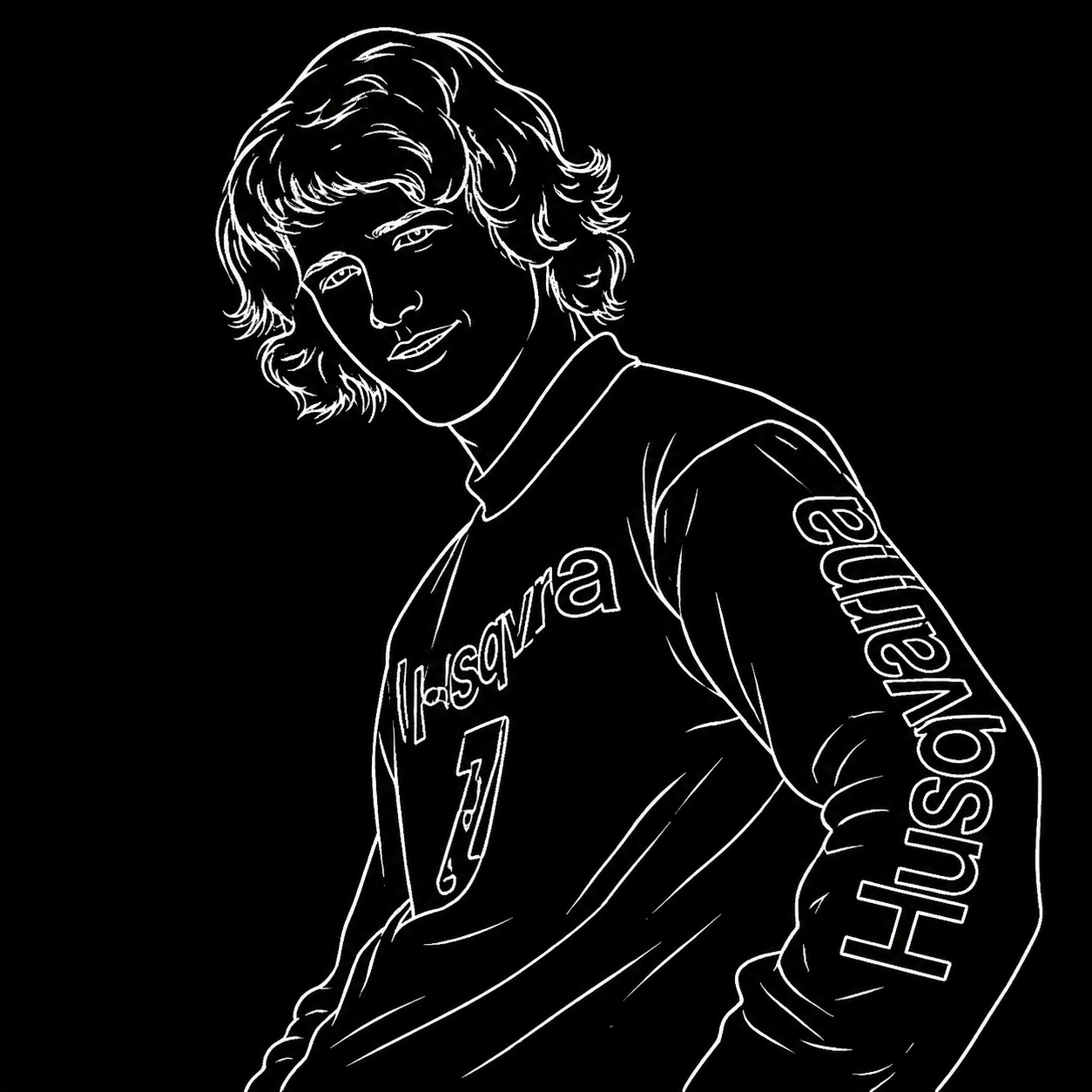
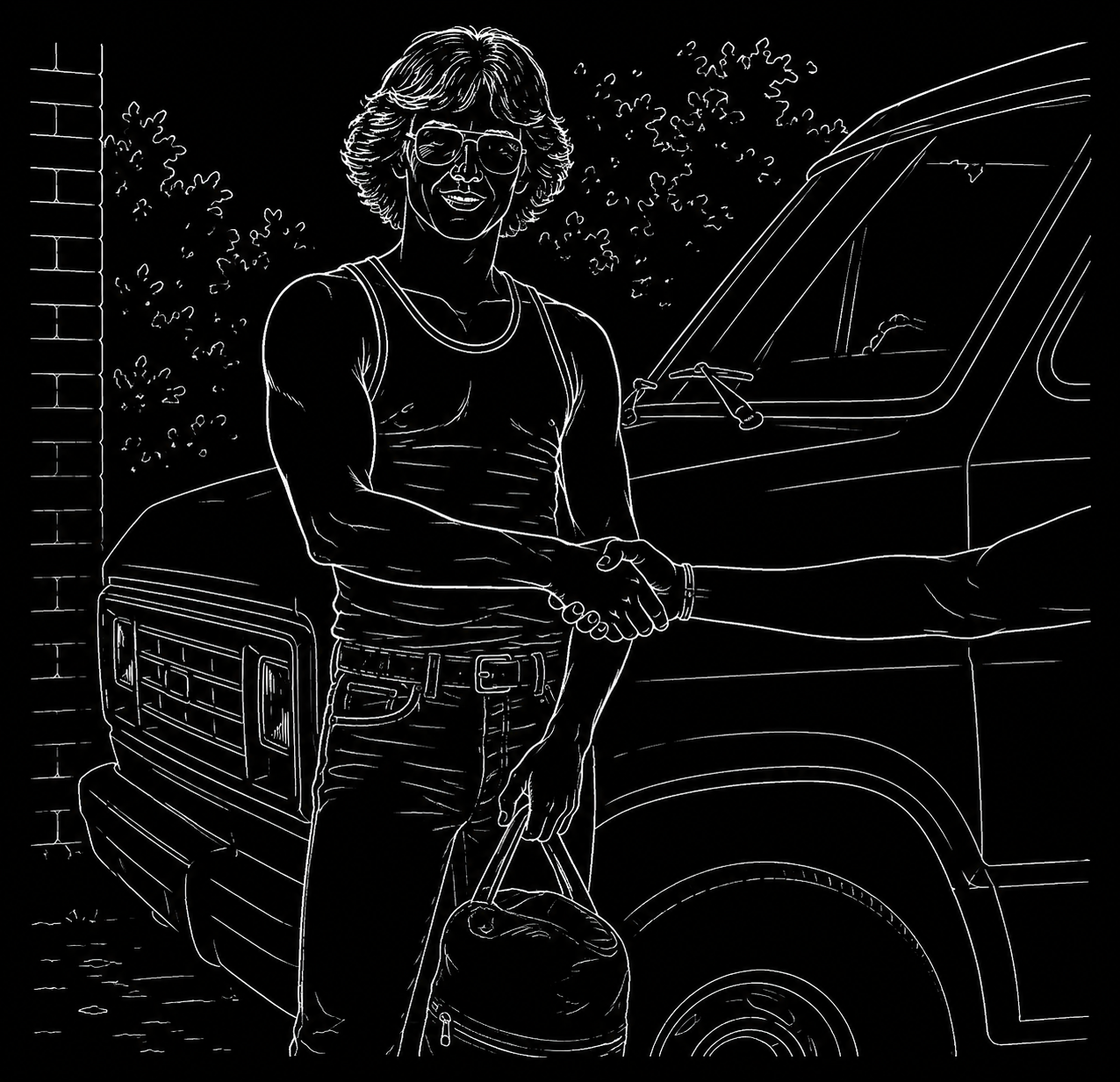
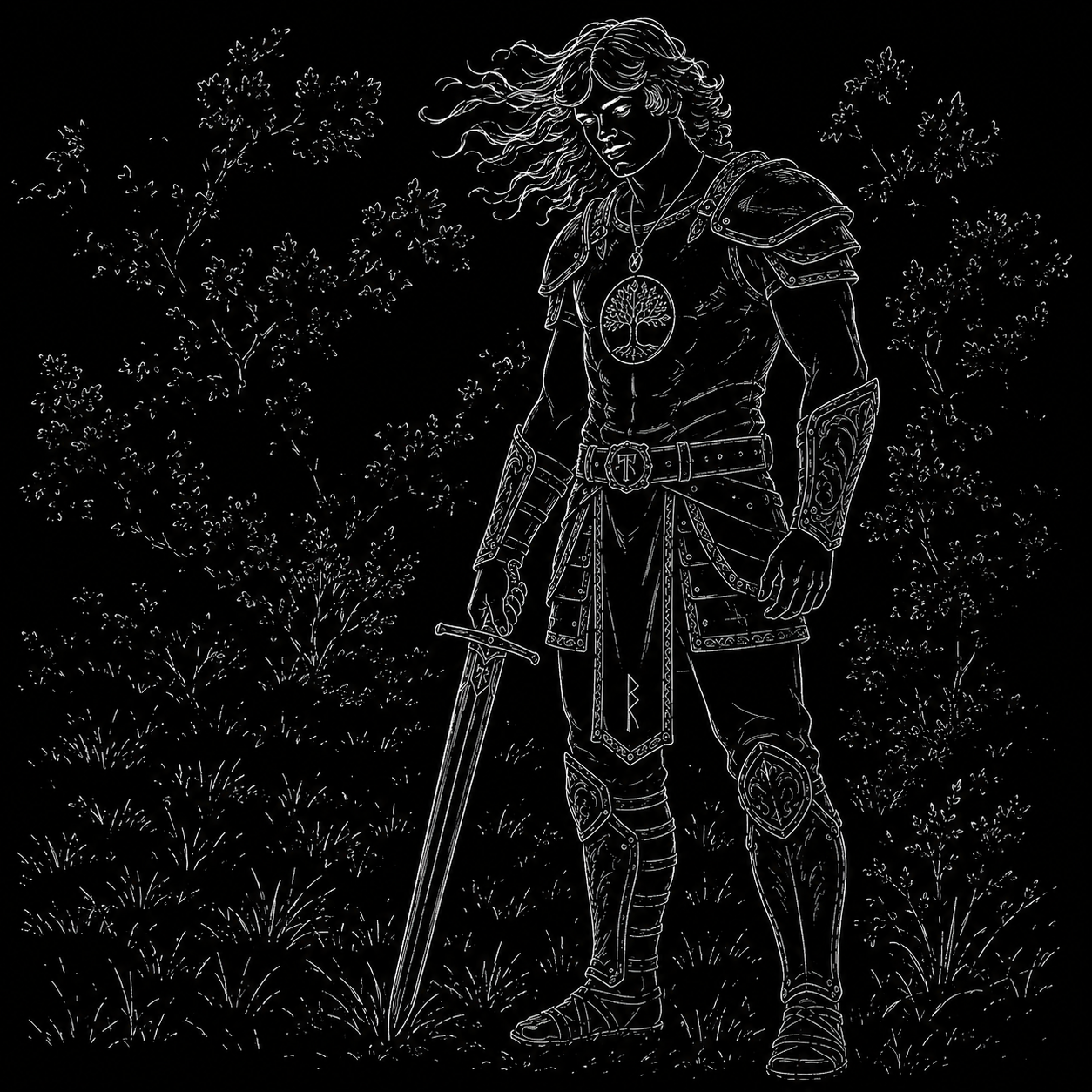
The armored warrior in the picture is AI getting carried away. In reality, I was nearly naked in my backyard poop-scooping with a shovel. AI saw a sword. I saw a chore.
Vanity, it seems, is a potent elixir—for both humans and algorithms.